Does Vitiligo Spread? What Dermatologists Want Patients to Know
October 7, 2026
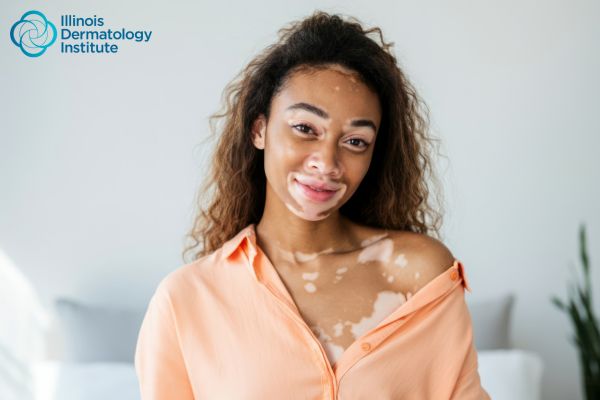
You’ve noticed a patch of skin that looks lighter than the rest, maybe on your hands or around your mouth. It doesn’t hurt and it isn’t itchy, but you can’t stop looking at it. The real worry isn’t what it is. It’s whether it’s going to keep showing up in new places. That question is what brings most vitiligo patients into a dermatologist’s office, and there’s an honest answer.
Quick answer: For most people, yes, vitiligo can spread over time, though how much and how fast varies widely and is impossible to predict from a single patch.
What Is Vitiligo?
Vitiligo happens when the cells that give skin its color, called melanocytes, stop working or are destroyed. The result is patches of skin that turn lighter than your natural tone, sometimes described as depigmented, and areas with hair can turn white or silver too.
Researchers believe the immune system mistakenly attacks these pigment cells, which makes vitiligo an autoimmune condition. The exact reason this happens isn’t fully understood, and that uncertainty is normal. Even dermatologists who treat vitiligo regularly can’t always explain why it starts in one person and not another.
Vitiligo affects people of every race and skin tone in roughly equal numbers, though it tends to be more noticeable on darker skin. About half of people who develop it do so before age 20, and it often begins in childhood.
What vitiligo does not matter just as much. It isn’t contagious, so you can’t catch it from someone or pass it to anyone else. And it isn’t caused by anything you did, ate, or were exposed to in a way you could have prevented.
Does Vitiligo Spread?
For many patients, yes. Vitiligo tends to spread over time, though how much and how fast varies enormously from person to person. Some see new patches within months. Others go years, or their entire lives, with the same small area and no further change.
Much of that difference comes down to type. The two most common forms behave differently enough that knowing which one you have tells you a lot about what to expect.
| Non-Segmental Vitiligo | Segmental Vitiligo | |
| How common | Most common form | Less common |
| Pattern | Roughly symmetrical, both sides of the body | Usually one area or one side only |
| Typical areas | Hands, around the eyes, near the mouth | A single limb, side of the face, or patch of scalp |
| Course over time | Can continue spreading over months or years, often in waves | Tends to stabilize within a year or two |
Even within a single patient, vitiligo rarely moves in a straight line. Periods of noticeable change are often followed by long stretches where nothing changes at all. That unpredictability is frustrating, but it’s a normal part of how the condition behaves.
What Causes Vitiligo to Spread?
Ongoing activity in the immune system against melanocytes is what drives vitiligo to spread, and several known factors can set off or accelerate that activity in someone already prone to the condition. Known triggers for new or expanding patches include:
- A severe sunburn
- An injury to the skin, such as a cut, scrape, or friction
- Exposure to certain chemicals, including some hair dyes and skin-lightening products
- Significant physical or emotional stress
One specific pattern dermatologists watch for is called the Koebner phenomenon: new patches forming at the site of skin trauma, sometimes weeks after the original injury has healed. This is part of why sun protection matters so much for people with vitiligo, beyond the fact that depigmented skin burns more easily than the skin around it.
The connection to stress is real but not fully understood, and it doesn’t affect every patient the same way. Dermatology research on known vitiligo triggers points to a combination of genetic susceptibility and these external factors working together, rather than any single cause acting alone. Genetics play a real role too. Having a close relative with vitiligo raises your own risk, though it doesn’t guarantee you’ll develop it.
Vitiligo Progression and Long-Term Outlook: Is It Permanent?
For most patients, vitiligo is a long-term condition without a cure, though its course looks different for everyone. Some see meaningful repigmentation over time, especially with treatment started early. Others find their patches stay largely the same for years.
Because progression is so unpredictable, regular follow-up with a dermatologist is one of the most useful things a patient can do. Tracking how patches change over months, rather than guessing, is how progression actually gets managed rather than just noticed after the fact.
Treatment doesn’t reverse the underlying condition, but several options can help slow new spread or restore color to affected areas. Options generally fall into a few categories:
- Topical treatments applied directly to affected skin
- Light-based therapies using targeted light exposure over a series of sessions
- Surgical options, considered in some cases once patches have been stable for a while
Neither approach works instantly, and results vary from patient to patient, but a dermatologist can help set realistic expectations based on your specific pattern of vitiligo.
Living With Vitiligo
Spreading is common with vitiligo, but it’s genuinely unpredictable, and having a few patches now doesn’t tell you what next year will look like. Known triggers like sun exposure, skin injury, and stress at least give patients something concrete to manage, and having a dermatologist track your specific pattern over time is the clearest way to catch changes early.
At Illinois Dermatology Institute can confirm what you’re dealing with, keep an eye on how your patches evolve over time, and talk through options such as topical treatments or light-based therapy if you’d like to address the color loss.
Book an appointment to get a clear picture of what’s happening with your skin and where to go from here.
FAQs
- Is vitiligo contagious?
No. Vitiligo isn’t contagious. It develops from changes inside a person’s own immune system, not from outside exposure.
- Can children get vitiligo, and does it behave differently in kids?
Yes. About half of cases start before age 20. Vitiligo looks and behaves the same in kids as in adults, though children may need extra support with confidence at school.
- Does stress actually make vitiligo worse?
Stress is one of several factors linked to new or expanding patches, but it’s not a cause on its own and affects patients differently. Managing stress won’t cure vitiligo, but it’s a reasonable part of overall care.
- Is it safe to cover patches daily with makeup or self-tanner?
Yes. Camouflage makeup is a common, dermatologist-supported option, and self-tanner works similarly. Depigmented skin burns more easily, though, so use sunscreen underneath either one.
- How is vitiligo diagnosed?
A dermatologist can usually diagnose vitiligo through a skin exam alone. Some also use a Wood’s lamp, a specialized ultraviolet light, to see patches more clearly and rule out other conditions.